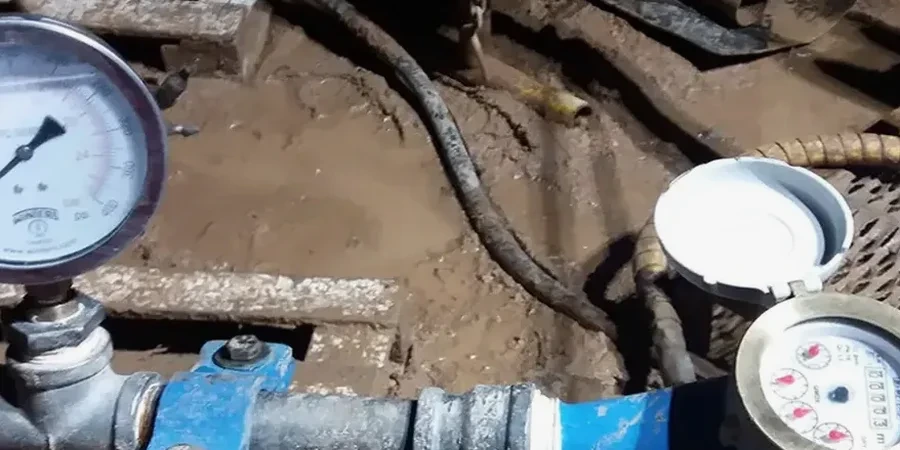
IBC Chapter 18 and ASCE 7-22 Section 12.13 both require accurate quantification of subsurface water flow when designing below-grade structures. In Worcester, where dense glacial till overlies fractured bedrock of the Paxton and Littleton formations, assuming a uniform permeability coefficient often leads to costly groundwater problems during excavation. Our team runs field permeability tests according to ASTM D4630 and ASTM D6391, applying the Lefranc method in soil borings and the Lugeon packer test in bedrock intervals. We correlate these results with grain size distributions to validate laboratory estimates, and we integrate the data directly into deep excavations dewatering plans when projects abut the Blackstone River or Lake Quinsigamond.
A Lugeon value below 1 in Worcester's bedrock usually means grout won't penetrate; above 5, you need a curtain strategy before excavation.
Quick answers
What is the difference between a Lefranc test and a Lugeon test?
A Lefranc test measures hydraulic conductivity in granular soil or soft rock using an open borehole section or a screened casing; it operates at low pressure and records either constant-head flow or variable-head recovery. A Lugeon test is a pressurized packer test specifically for fractured rock. It seals off a discrete interval with inflatable packers and injects water in five pressure steps, producing Lugeon units (1 Lu ≈ 1.3×10^-5 cm/s) that reflect fracture apertures and interconnection. In Worcester projects, we use Lefranc in the till and outwash, then switch to Lugeon once we hit competent bedrock.
How much does a field permeability test cost in Worcester?
For a single Lefranc test in a soil boring, budget between US$650 and US$850. A multi-stage Lugeon profile in bedrock typically runs US$850 to US$1,060 per tested interval, including packer setup, pressure-step data collection, and the permeability report. The final cost depends on access, hole depth, and the number of zones tested.
When does the Worcester Conservation Commission require in-situ permeability data?
Whenever a project proposes a permanent dewatering system, an infiltration basin within 100 feet of a water supply well, or a below-grade structure that intercepts the seasonal high groundwater table. The Commission and MassDEP want site-specific K-values, not textbook estimates, to review groundwater mounding analyses and verify that discharge won't impact adjacent wetlands like those along the Blackstone River corridor.