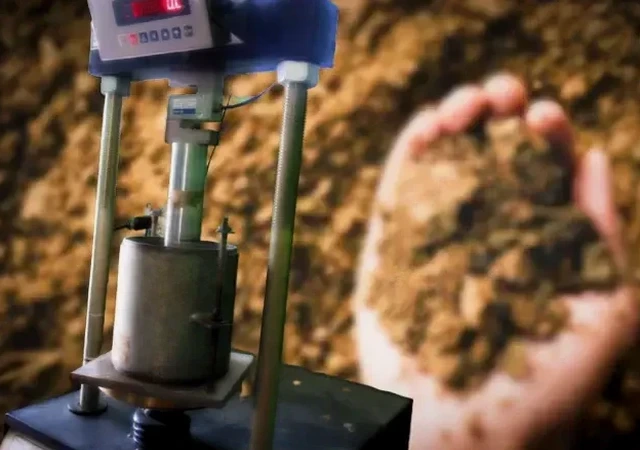
Worcester's glacial history left behind a complex mix of dense till, outwash sands, and pockets of lacustrine clay that can surprise even experienced excavation crews. When a subgrade fails under traffic loading, the root cause often traces back to soil strength assumptions that never matched field conditions. The laboratory CBR test provides a direct measurement of that strength, comparing penetration resistance against a standard crushed stone reference. Our lab on the West Side processes remolded and undisturbed samples under controlled moisture and density conditions, delivering CBR values that pavement engineers can use with confidence. For projects near Lake Quinsigamond or along the Blackstone River corridor, where groundwater sits high and fine-grained soils dominate, we often recommend pairing the CBR with a grain size analysis to confirm drainage characteristics before finalizing the pavement section.
A soaked CBR value below 3 percent in Worcester's varved clays means the subgrade cannot support construction traffic — let alone design loads — without mechanical stabilization.