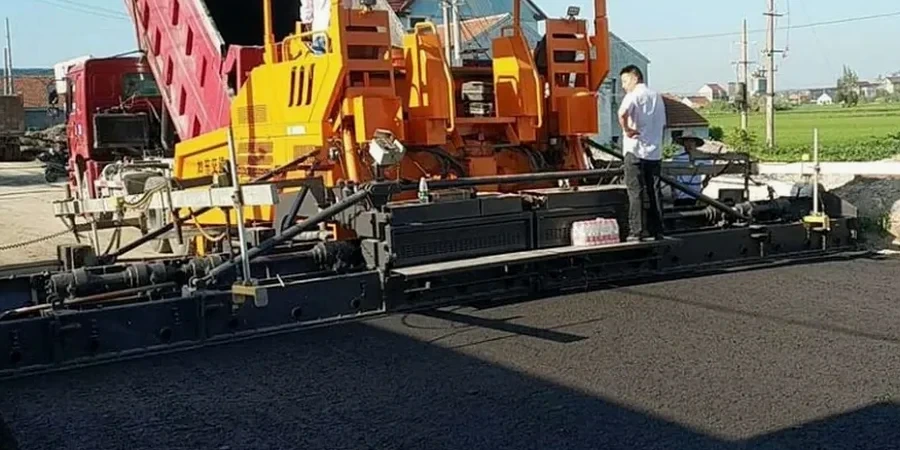
Designing a parking lot off Shrewsbury Street is nothing like paving a subdivision road up near the airport. Worcester's geology shifts dramatically from deep sandy outwash in the Blackstone Valley to dense, bouldery lodgment till on the city's seven hills. I've pulled pavement cores on Highland Street that tell a story: one section holds up for twenty years, and two blocks away it's alligator-cracked after five. The difference is rarely the asphalt mix—it's the subgrade. That's where flexible pavement design stops being a cookbook exercise and starts demanding local geotechnical judgment. Before we even open the AASHTO 93 guide, we map the glacial history of the site. A route through the Tatnuck Brook floodplain needs a fundamentally different structural number than a commercial pad on drumlin till near Bell Pond. This isn't theoretical. It is what keeps your pavement from failing after the first freeze-thaw cycle, and it saves you from costly subgrade repairs later. When the subgrade profile is uncertain, we combine the pavement design with a test pits program to verify layer thicknesses, moisture condition, and the presence of cobbles that can derail a standard ESAL calculation.
Worcester's pavement fails most often from the bottom up—frost in the subgrade, not traffic on the surface. Our designs start there.
Site-specific factors
The city sits at an elevation ranging from 340 feet along the Blackstone River to over 670 feet on Airport Hill, and that topography creates a drainage problem that directly attacks flexible pavements. Water infiltrates through cracks, saturates the subgrade during the spring melt, and turns a granular base into a pumping mess under traffic. I've measured pavement deflections in April—right after the frost comes out of the ground—that are three times higher than the same section in August. If your flexible pavement design doesn't include a positive drainage path and a non-frost-susceptible subbase material, you are building a maintenance liability. The MEPDG framework helps us model this seasonal damage accumulation explicitly, but it requires accurate local climate files and unbound material characterization, which we generate from our own laboratory testing. Skipping the grain size analysis on the proposed subbase material is a risk no competent design can afford in Worcester County.
Quick answers
How much does a flexible pavement design for a commercial parking lot in Worcester typically cost?
A complete design package—including subgrade investigation, triaxial Mr testing, and AASHTO 93 structural analysis—for a typical commercial parking lot of 20,000 square feet in Worcester ranges from US$1,720 to US$5,980. The final figure depends on the number of borings required, the depth to competent bearing material, and whether we need to run the full MEPDG analysis for a permitting requirement.
What is the difference between AASHTO 93 and MEPDG for Worcester pavements?
AASHTO 93 uses an empirical equation based on the AASHO Road Test from the 1950s, which did not include Worcester's seasonal frost effects. It produces a single Structural Number and assumes a constant subgrade modulus. MEPDG, in contrast, models the pavement response under hourly climate data, predicts distresses (rutting, fatigue cracking, thermal cracking) month by month, and allows us to quantify the damage caused specifically by the freeze-thaw cycles that dominate pavement life in Central Massachusetts.
Do you test the subgrade soil in a laboratory or just use tables from the geotechnical report?
We always run laboratory resilient modulus tests (AASHTO T 307) on undisturbed samples from the design subgrade elevation. Tables and correlations, such as the NCHRP 1-37A models that estimate Mr from CBR or SPT N-values, can be off by 30 to 50 percent in Worcester's overconsolidated glacial till. Using a book value for Mr instead of a measured one frequently results in an overdesigned pavement that wastes money or an underdesigned section that cracks prematurely.
How do you account for frost heave in the flexible pavement design?
We incorporate a frost protection strategy based on the IBC's 48-inch frost depth for Worcester. The design specifies a non-frost-susceptible subbase layer of sufficient thickness to prevent ice lens formation in the subgrade. We verify the material gradation with a grain size analysis per ASTM D2487 to confirm that less than 5 percent of the particles pass the No. 200 sieve. The MEPDG EICM module then models the thermal gradient through the pavement structure and predicts the heave magnitude, which we use to refine the layer thicknesses.