Worcester sits 480 feet above sea level, draped across seven hills with a frost depth that reaches 48 inches in a cold winter. Any shallow foundation here has to deal with that freeze-thaw cycle, plus the mix of glacial till, outwash sands, and occasional pockets of marine clay left from Lake Hitchcock. We see it every day: a builder grabs a plot near Green Hill Park assuming decent bearing, only to hit loose fill from the old brickyards. Our job is to make sure the footing design matches what's really underground, not what the surface suggests. That means pulling soil borings, running lab tests under ASTM D2487 for classification, and feeding real numbers into the bearing capacity equation—not textbook defaults. For sites with marginal near-surface soils, we often pair the shallow investigation with a test pit campaign to visually map fill thickness and identify buried organics before locking in the foundation type. The goal is a footing that handles Worcester’s seasonal heave without over-excavating the budget.
A footing is only as reliable as the 12 inches of soil directly beneath it. In Worcester, that zone changes block by block.
Methodology and scope
Worcester’s industrial boom started with the Blackstone Canal in 1828, and the mills that followed left a legacy of urban fill, ash layers, and buried foundations throughout the Canal District, Main South, and Kelley Square. That history matters when you set a spread footing. We’ve pulled cores on Shrewsbury Street where the upper six feet was brick rubble and cinders—fine for pavement, useless for bearing. Our shallow foundation approach leans on in-situ testing first: standard penetration tests (SPT per ASTM D1586) logged every 2.5 feet, shear vane in soft zones, and pocket penetrometer readings on undisturbed samples. Lab work confirms fines content and plasticity so we can flag collapsible or frost-susceptible soils. The IBC’s presumptive load-bearing values rarely apply here—most Worcester sites need site-specific numbers. When column loads push beyond what a strip footing can handle, we evaluate whether a
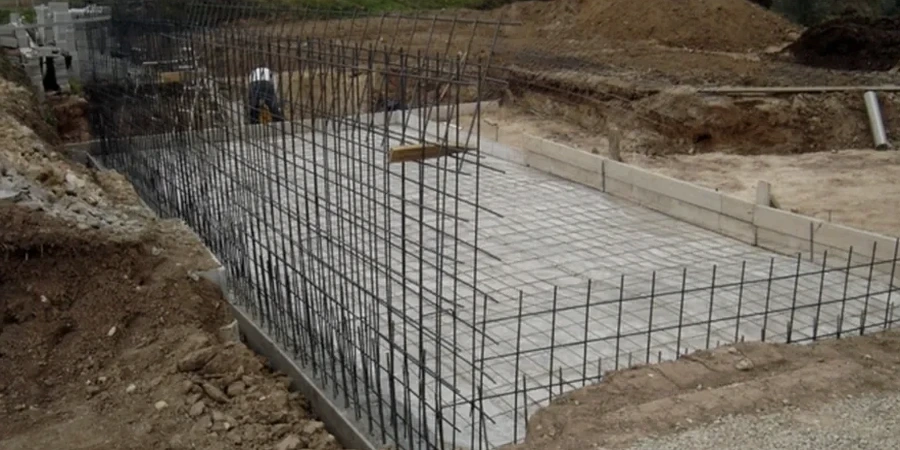
mat foundation makes more sense, especially where differential settlement across glacial till and outwash transitions is a concern. The design packet we deliver includes allowable bearing pressure, settlement estimates under dead-plus-live load, and a clear note on subgrade prep—because a good concrete pour on bad subgrade is still a future crack.
Quick answers
How deep do footings need to be in Worcester, MA?
The code minimum is 48 inches below finished grade for frost protection per the Massachusetts amendments to the IBC. However, the actual depth depends on bearing stratum depth. If competent till is at 36 inches, you still go to 48 inches for frost. If fill extends to 60 inches, you either remove it or deepen the footing to bear on competent material below the fill. We determine this from the boring logs.
What does a shallow foundation investigation cost for a typical single-family addition?
For a standard residential project requiring a boring program, lab testing, and a stamped design report, the cost typically falls between US$2,060 and US$2,990. The final number depends on access, number of borings, and whether we need to bring in a drill rig or can use hand-auger equipment.
Do you design the footing reinforcement or just the geotechnical parameters?
We provide the geotechnical design parameters: net allowable bearing pressure, modulus of subgrade reaction, friction coefficient, and settlement estimates. The structural engineer uses these values to design the concrete dimensions and reinforcement. We coordinate directly with the SEOR to make sure the assumptions align.
How long does the process take from site visit to report delivery?
Fieldwork takes one day for most residential or light commercial sites. Lab work on the soil samples runs three to five business days. The report—with boring logs, lab results, bearing capacity calculations, and construction recommendations—is typically in your inbox within seven to ten business days of the site visit.