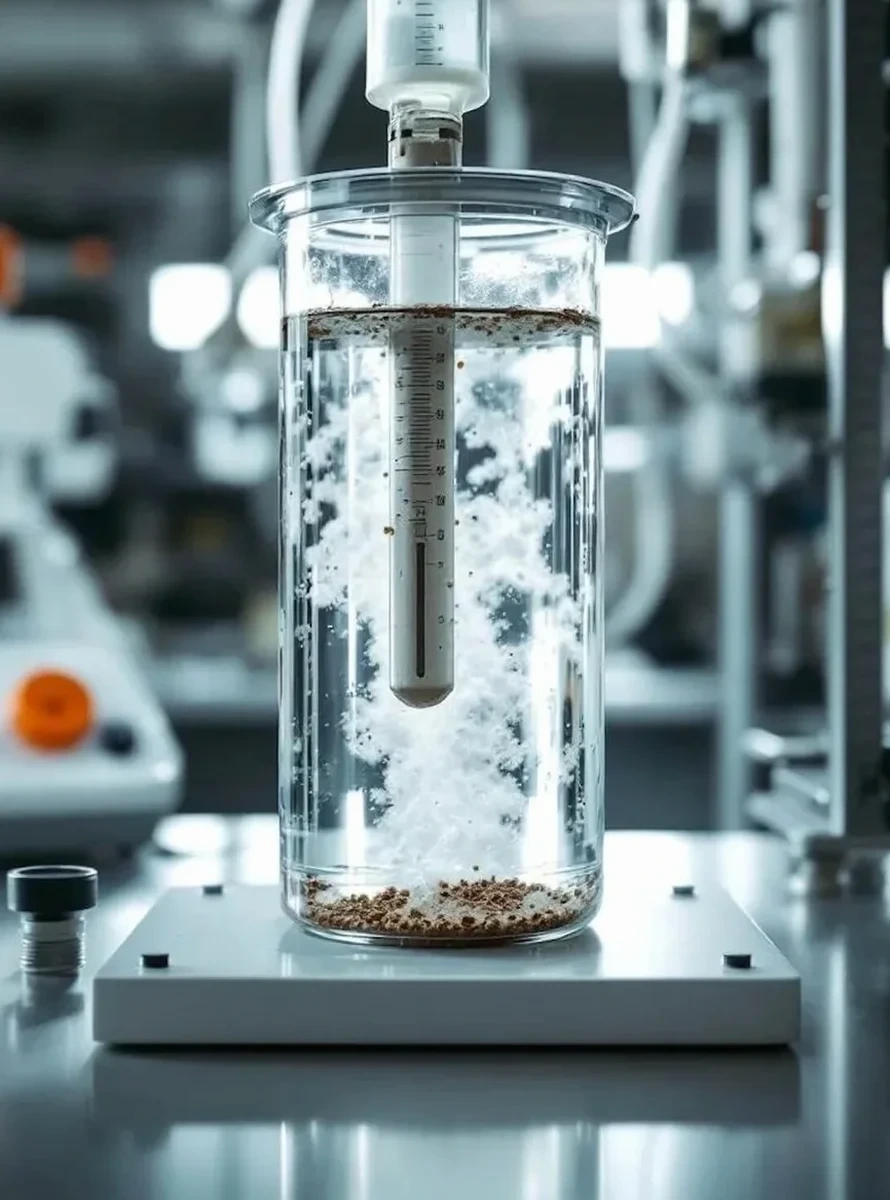
Worcester sits at an elevation of roughly 480 feet, built on a complex footprint of glacial Lake Hitchcock sediments and compact lodgment till that demands precise particle characterization before any structural load is applied. We run grain size analysis on hundreds of samples pulled from sites across the Seven Hills each year, and the spread of material types—from boulder-rich outwash to the silty varved clays near the Blackstone River—makes a combined sieve-and-hydrometer approach non-negotiable. A standard D422 sieve stack gets you the coarse fraction from gravel down to the No. 200 sieve, but the fines passing that sieve require the ASTM D7928 hydrometer procedure to separate silt from clay. We tie the results directly into USCS classification per ASTM D2487 and feed those parameters into bearing capacity and drainage models. When the upper 20 feet of stratigraphy alternates between dense till and soft lacustrine layers, relying on a single-point classification invites settlement surprises. Many Worcester engineers pair the grain size data with a CPT test to calibrate tip resistance against particle size, especially where the till transitions into compressible silt lenses.
A five-percent difference in clay fraction can shift a soil from free-draining to practically impermeable—hydrometer data catches what the sieve stack misses.
Quick answers
What is the typical turnaround time for a combined sieve and hydrometer analysis in Worcester?
Standard turnaround is five to seven business days from sample receipt. The hydrometer portion requires a 24-hour sedimentation period plus temperature stabilization, and samples with high organic content may need pre-treatment that adds one day. We can expedite to three business days for active construction support when advance notice is given.
How much does a grain size analysis with hydrometer cost per sample?
A combined sieve-and-hydrometer analysis typically runs US$110 to US$220 per sample depending on whether the full hydrometer procedure with multiple readings is required. A sieve-only analysis on coarse granular material falls at the lower end of that range.
Why do Worcester projects need the hydrometer test when the field log already identifies the soil as sand or silt?
Field identification by visual and tactile methods cannot reliably quantify the silt-versus-clay split below the No. 200 sieve. Worcester's varved clays and glacial rock flour often feel silty to the touch but contain 30 percent or more clay-sized particles, which governs permeability, frost heave, and consolidation rate—parameters that directly affect footing and pavement design.
What sample size do you need for a complete grain size distribution test?
For soils with maximum particle size under 4.75 mm, we need approximately 500 grams of material. For soils containing gravel up to 19 mm, we require 2 to 5 kilograms to ensure the coarse fraction is representative. We can split larger samples in the lab; the key is that the field sample captures the full range of particle sizes present in the stratum being characterized.